For over twenty years we have been committed every day to offering high-quality smiles to dentists and patients. We specialize in the design and manufacture of high-quality and outstandingly reliable devices for oral surgery.We offer a range of customized services and professional training courses able to meet the needs of our professionals and the high expectations of their patients. We value innovation and development, integrating our knowledge and expertise with the most advanced technology. We work with passion and discipline to ensure the utmost reliability of our products and to improve the daily clinical practice of dentists.
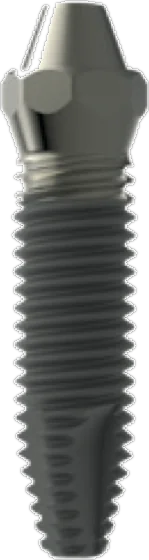
Histological research on implants showed best performance of the BIO-ACTIVE surfaces (treated with double acid-etching) compared to the “machined” surfaces, especially in cases of poor bone quality. The BIO-ACTIVE treatment consists of a double organic acid etching (the first creates the macro-texture, the second generates the micro-rough structure). Each treatment involves a final cold plasma decontamination. The benefits introduced by the treated surfaces are more evident in difficult situations, where the improved biological response can provide for the reduced mechanical contribution. The surface morphology of the implants was evaluated by observation under the Scanning Electron Microscope. Figures 1-4, with low enlargement, demonstrate that the macroscopic aspects (thread and cutting-edge) of the screw are not affected by the treatment. In figures 5-6 (10.000x and 15.000x), with the major enlargement, we can observe the typical micro-roughness topography produced by the surface treatment with double acid etching. As known and reported in the scientific literature, this particular micro topography allows the surface to act as a “sponge” which strongly interacts with the clot and stimulates the regeneration of bones. From these images it is possible to highlight the absence of contaminants or external deposits.


The high level of cleanliness of the BIO-ACTIVE surface was confirmed by the analysis of the chemical composition of the surface by XPS. The depth analyzed is about 5 nm and thus provides a direct indication of the chemical composition of the material layers that are in contact with the bone tissue. The result of the analysis is expressed in atomic %. The results are presented in the table below:
C | O | Ti | N | Si | P |
|---|---|---|---|---|---|
30,8 | 47,1 | 19,3 | 0,9 | 1,2 | 0,7 |
In the surface analysis of titanium the presence of at least three elements is expected: titanium, oxygen and carbon. The latter element derives from the presence of carbonaceous molecules (CO2 or hydrocarbon type compounds) which are inevitably present in the Earth’s atmosphere. The surfaces of metals are combined with these carbonaceous species, which are “invisible” in the more traditional methods of analysis, but which can be detected by a specific analysis such as the XPS. Carbon can also derive from “heavier” contamination, such as contact with oils or fats during the production process. To discern between “natural” C and C from contamination it is necessary to take into account the quantitative aspect. Percentages of 30-40% are physiological and can be considered normal. Higher percentages indicate the presence of contamination. Theoretically, the maximum percentage of Ti observable in surface analysis is about 33% (since titanium oxide TiO2 is present on the surface). The inevitable presence of C previously described further lowers this theoretical limit. On the basis of the experience concerning the surface analysis of implants and literature data, the maximum observable concentration of Ti by XPS is 14-19%. A percentage of Ti higher than 10% can be considered satisfactory.